


5 Practical Civil Engineering Courses to Advance Your Career in Construction and Structural Engineering
Learn Construction Management, Road Construction, Concrete Technology, Pavement Design, and Pile Foundation Design
Civil engineering is a broad and challenging profession that combines engineering principles, technical calculations, construction methods, and practical problem-solving. Whether you are a university student, a graduate engineer, or an experienced site engineer, continuously developing your technical knowledge is essential for professional growth.
Working on real construction projects requires more than understanding engineering theory. Engineers must interpret drawings and specifications, coordinate with contractors, inspect construction activities, understand material properties, and ensure that completed works meet the required quality standards.
For engineers interested in infrastructure and construction, developing knowledge across different areas of civil engineering can open new opportunities and improve their ability to handle technical challenges.
To support this learning journey, Mohammad Hamdan offers a collection of online courses on Udemy covering five important areas of civil engineering:
Construction Field Management
Road Construction
Concrete Construction
Structural Design of Road Pavement
Pile Foundation Design
These courses cover complementary topics, from understanding construction activities on site to learning the principles behind pavement and foundation design.
Why Should Civil Engineers Continue Learning?
The construction industry continues to evolve, with increasingly complex infrastructure projects, demanding quality requirements, and greater emphasis on safety, durability, and efficient project delivery.
Civil engineers who combine theoretical knowledge with practical construction understanding are better equipped to identify problems, coordinate with project teams, and make informed technical decisions.
Continuous learning can help engineers:
Improve their understanding of construction methods and engineering materials.
Develop confidence in reading drawings and project specifications.
Understand site inspection, testing, and quality control requirements.
Strengthen their knowledge of structural and geotechnical engineering.
Connect design calculations with actual construction practices.
Prepare for greater technical responsibilities throughout their careers.
The following five courses provide learning opportunities in several essential areas of civil engineering.
1. Construction Field Management: Understand How Construction Works on Site
Construction field management is an essential part of civil engineering, particularly for engineers working on infrastructure and building projects.
A site engineer must understand how project documents, construction methods, materials, and inspection procedures work together to achieve successful project delivery.
The Construction Management: Construction Field Management course introduces important subjects that engineers encounter during construction activities.
Key topics covered
Project specifications and contract drawings.
Bills of Quantities (BOQ) and shop drawings.
Method statements, safety, and inspection and test plans.
No Objection Certificates (NOCs) and utility coordination.
Geotechnical investigation and borehole reports.
Earthworks and excavation activities.
Concrete construction and reinforcement steel.
Formwork and falsework.
Deep excavation support systems.
Foundations, waterproofing, and dewatering.
Quality assurance and quality control (QA/QC).
Who should take this course?
This course is particularly relevant to graduate civil engineers, site engineers, construction supervisors, and professionals who want to develop a broader understanding of construction procedures and site responsibilities.
It can also help engineering students become familiar with the documents and activities they may encounter when entering the construction industry.
Explore the course on Udemy:
Construction Management: Construction Field Management
2. Road Construction: Learn Practical Highway Construction Methods
Road construction involves several stages, beginning with surveying and site preparation and continuing through earthworks, pavement layer construction, asphalt paving, and quality control.
Each stage must be completed correctly to achieve a durable pavement structure that can withstand traffic loading and environmental conditions.
The Construction Management: Road Construction course introduces the main activities involved in road construction and the importance of material testing and quality control.
Key topics covered
Preliminary surveying and road layout.
Site clearance, excavation, and embankment construction.
Subgrade preparation and compaction.
Field density testing using the sand-cone method.
California Bearing Ratio (CBR) testing.
Construction of subbase and aggregate base courses.
Prime coat and tack coat applications.
Asphalt mixtures and paving operations.
Asphalt layer thickness and compaction.
Asphalt quality control and laboratory testing.
Introduction to Marshall asphalt mix design.
Why is this knowledge important?
Understanding road construction helps engineers identify potential problems during site execution, verify compliance with project specifications, and coordinate effectively with contractors and testing laboratories.
For site engineers, this knowledge is especially useful when inspecting pavement layers, reviewing test results, and monitoring the quality of asphalt works.
Explore the course on Udemy:
Construction Management: Road Construction
3. Concrete Construction: Understand Concrete Materials, Cracking, and Prestressing
Concrete is one of the most widely used materials in civil engineering. It is essential for bridges, foundations, retaining walls, buildings, and numerous infrastructure structures.
However, achieving the required strength, durability, and performance depends on understanding concrete ingredients, mix proportions, curing, admixtures, reinforcement, and the causes of cracking.
The Construction Management: Concrete Construction course introduces important concepts in concrete technology and structural construction.
Key topics covered
Concrete ingredients and basic properties.
Hydraulic and non-hydraulic cement.
Chemical admixtures and superplasticizers.
Pozzolanic materials, including silica fume and fly ash.
Water-cement ratio and concrete performance.
Fiber-reinforced concrete.
Self-consolidating concrete.
Reinforcement steel and corrosion resistance.
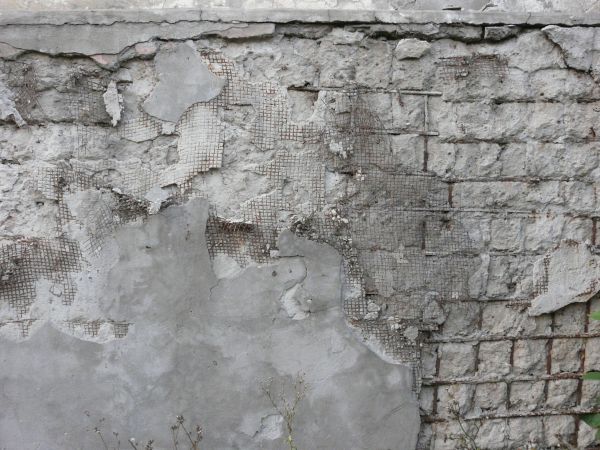
Causes and management of concrete cracks.
Introduction to prestressed concrete.
Pre-tensioning and post-tensioning concepts.
Why should engineers learn concrete technology?
Understanding concrete behavior is essential for engineers involved in construction inspection, material approvals, quality control, and structural works.
For example, knowledge of the water-cement ratio helps engineers understand its influence on concrete strength and durability. Understanding cracking mechanisms can also help engineers distinguish between different types of cracks and recognize when further investigation is required.
The introduction to prestressed concrete is particularly relevant to engineers interested in bridge construction and other infrastructure projects involving prestressed structural elements.
Explore the course on Udemy:
Construction Management: Concrete Construction
4. Structural Design of Road Pavement: Learn CBR and AASHTO Methods
While road construction focuses on the execution of pavement works, pavement design focuses on determining a suitable pavement structure to withstand anticipated traffic loading over its intended design life.
Flexible pavement design requires engineers to consider traffic volume, axle loads, subgrade strength, pavement materials, and structural performance requirements.
The Structural Design of Road Pavement course introduces the principles and calculations involved in flexible pavement design.
Key topics covered
Components of flexible pavement structures.
Traffic surveys and vehicle classification.
Axle load surveys and Equivalent Single Axle Loads (ESAL).
Traffic growth and design-period calculations.
Subgrade strength and California Bearing Ratio (CBR).
Pavement design using the CBR method.
Introduction to the AASHTO pavement design method.
Resilient modulus and pavement layer coefficients.
Reliability and serviceability considerations.
Structural number calculations.
Determination of pavement layer thicknesses.
Why is pavement design important?
A pavement must be designed to distribute traffic loads effectively while maintaining adequate performance throughout its service life.
Insufficient pavement thickness, weak subgrade conditions, or inappropriate material selection may contribute to premature pavement deterioration and increased maintenance costs.
Learning pavement design helps engineers understand how traffic loading and material properties influence pavement thickness and structural capacity.
This course complements the road construction course by connecting the principles used to design pavement layers with the activities required to construct them on site.
Explore the course on Udemy:
Structural Design of Road Pavement
5. Pile Foundation Design: Learn Bearing Capacity and Reinforcement Design
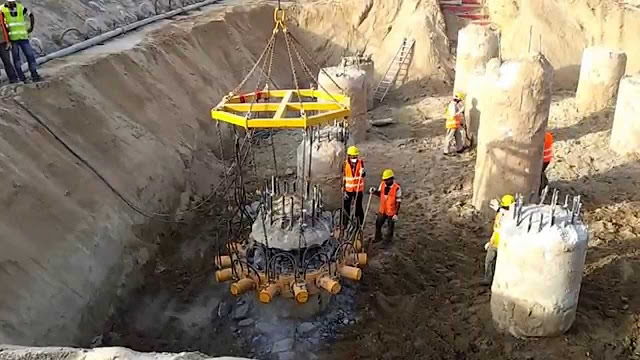
Pile foundations are widely used in infrastructure projects, bridges, high-rise buildings, and other structures where loads must be transferred to deeper soil layers or rock.
Pile design requires an understanding of both geotechnical resistance and structural capacity. Engineers must consider the surrounding soil, pile dimensions, applied loads, and the behavior of reinforced concrete under different loading conditions.
The Structures Design: Pile Foundation Design course introduces important principles and calculations used in pile foundation engineering.
Key topics covered
Types of foundations and deep foundations.
Geotechnical investigation and soil properties.
Shaft resistance and end-bearing resistance.
Axial pile bearing capacity calculations.
Pile group effects and factors of safety.
Field verification of pile capacity.
Structural stresses in concrete piles.
Bending moment and shear force considerations.
Longitudinal reinforcement requirements.
Shear and spiral reinforcement.
Why is pile foundation knowledge valuable?
Pile foundations are a critical component of many major infrastructure projects. Engineers working on bridges and other structures benefit from understanding how soil conditions, pile geometry, and structural loading influence foundation performance.
This knowledge is also valuable for site engineers involved in piling operations, reviewing design calculations, inspecting reinforcement cages, and understanding the purpose of pile load testing.
By studying the fundamentals of pile foundation design, learners can strengthen their understanding of the relationship between geotechnical engineering and structural engineering.
Explore the course on Udemy:
Structures Design: Pile Foundation Design
Which Course Should You Start With?
The best starting point depends on your current role, technical background, and professional goals.
| Your interest | Recommended course |
|---|---|
| Understanding site activities and construction documents | Construction Field Management |
| Learning earthworks, pavement layers, and asphalt construction | Road Construction |
| Improving your knowledge of concrete materials and prestressing | Concrete Construction |









Comments
Post a Comment