Posts

Video from my YouTube channel

Subscribe to My You tube channel

Critical Aspects of Quality Management in Flexible Pavement Construction

The presence of a reliable road network plays a significant role in the economic growth of any country. Roads are a key factor in the economic development of a nation, facilitating the movement of people and goods. A reliable road network ensures smooth and safe transportation, promoting efficiency in trade and commerce. In contrast, the absence of such infrastructure can delay and hinder the movement of goods, severely impacting economic progress. Global spending on infrastructure projects is projected to increase from approximately 4trillionperyearin2012tonearly9 trillion per year by 2025. This significant rise in investment highlights the critical importance of infrastructure, including road networks, in supporting economic growth. The construction of roads involves various stages before, during, and after the construction process. Poor quality assurance (QA) and quality control (QC) measures during any stage can result in low-quality roads incapable of sustaining expected traffic l...

The impact of using Polymer Modified Bitumen in Asphalt mixes

The economic growth of any country relies on many factors, such as natural resources, technology, manpower, regulations, and infrastructure. Infrastructure is essential for country development. Road networks are part of the infrastructure of any country. The presence of a reliable road network will facilitate the shipping of goods, which will save time and money and contribute to economic growth. A road network is considered reliable when it reduces the journey time, provides the best routes, properly covers a country or area, reduces the delay of public transportation, contributes to economic growth, and ensures a smooth ride. Building a high-quality road pavement that meets the needs of road users and ensures smooth riding requires good planning, design, and construction of the pavement. The construction of durable pavement can be attained through the collaboration of reliable design, selecting high-quality and suitable raw materials, appropriate asphalt mix design, and the implement...

An Assessment of Artificial Intelligence Capabilities in Structural Analysis: A Comparative Study of Determinate and Indeterminate Beams (Research paper)

This paper critically evaluates the performance of several AI models in structural analysis. The capability of different AI systems, including ChatGPT, DeepSeek, Gemini, and Perplexity, was assessed using a series of beam problems with varying degrees of static indeterminacy and structural complexity. The outputs were benchmarked against classical analytical methods, namely the force method and slope-deflection method, as well as numerical results obtained from structural analysis software (SAP2000). The results indicate that AI models can produce reasonably accurate results for statically determinate beams and systems with low levels of indeterminacy. However, their accuracy decreases significantly as structural complexity increases, with notable discrepancies observed in highly indeterminate systems. The study concludes that current AI models lack the effectiveness required for reliable structural analysis of complex systems and should not be used by engineers as the obtained result...

Bracing in steel structure

Image
Bracing is important part of steel structures. Bracing is added to increase the structure strength and increase structure stability when subjected to lateral loads such as wind load, earthquake load and others. In steel structures, columns and beams resist different loads such as axial loads, shear load, flexural stresses, etc. But without sufficient bracing structure will not be stable against lateral load and deformation can be large and beyond the acceptable. Therefore, the bracing is added to  significantly reduce the structure deformation due to external loads.  The main purpose of bracing is to ensure the structure lateral stability. Without bracing, structure will excessively sway. The structure significant deformation due to sway can result in damaging several elements of the structure such as connection, walls, cladding and others.  Bracing elements usually fabricated from steel sections such as angles, channels, rod, hollow sections or I sections. The bracing is...

Plate Load Test for Soil

Image
The plate load test is a common field test used in soil engineering to determine the bearing capacity and settlement behavior of soil. This test is usually carried out at construction sites before foundation design, especially for shallow foundations such as isolated footings, strip footings, and mat foundations. The main purpose of the test is to understand how the soil responds when a load is applied. In this test, a steel plate is placed on the ground at the required foundation level, and load is applied gradually through a hydraulic jack. By measuring the settlement of the plate under each load increment, the engineer can estimate the safe bearing capacity of the soil and predict the expected settlement under the foundation load. Purpose of Plate Load Test The plate load test is used to determine: 1. The ultimate bearing capacity of soil. 2. The safe bearing capacity of soil. 3. The settlement of soil under loading. 4. The modulus of subgrade reaction. 5. The suitability of soil fo...

AASHTO classification of soil

Image
Classifying the soil considered a significantly important in road engineering as it will help the Engineer in understanding the soil behavior under the loads, change in moisture and the traffic volume. AASHTO classification is one of the most used soil classification system in road projects.  This system is used mainly to evaluate the soil used in road construction especially materials used for road Embankment, Subgrade, subbase. The AASHTO classification system doesn't relies on the simple visual description, it relies mainly on lab testing such as sieve analysis and atterberge limits to classify the soil.  AASHTO classification system used mainly to classify soil according to their expected performance as a road construction materials. In road engineering, the road subgrade support the road pavementayers above it. If the road Subgrade is weak or highly compressible, etc this will result in road settlement, cracks formation, Formation of rutting and low performance of Pavemen...

Temperature load

Temperature load shall be considered by the designers as it can excert significant stresses on structurs. Unlike dead and live load, the temperature load is not generated due to material or people weight. It is generated due to temperature changes that will cause structure elongation and contraction.  Temperature load is the stress generated in the structure due to change in structure temperature. This effects occurs due to daily weather variation or seasonal variations or due to direct exposure to sun or fire or due to the temperature difference between the construction and operation stages.  No stress will be generated for structure element that can move or on other word accommodate the structure expansion and contraction due to temperature effects. But if the structure elements movement is restricted, then the structure element will resist the changes in size which will generate stresses in the structure.  Example, a very good example of the effects of temperature load...

Road servicibility level

Road servicibility level is considered as an Engineering standard used to evaluate road ability to service the traffic safely, comfortably and efficiently. The government will use the road serviceability level records and available data to determine the priorities in maintenance to reduce vehicles wear and prevent traffic jam.  The evaluation of a road will be based mainly on the physical condition of the road pavement and the flow of traffic: 1.Pavement Condition: The Present Serviceability Index (PSI)  The PSI isolate the physical condition of road pavement. This index was developed based on a wide and extensive transport road. It has a numerical scale to evaluate the pavement physical condition and it ranges from 0 to 5. 1-Excellent (5): Excellent pavement surface, smooth and free from defects. This level is ideal therotical because new road rarely get the score of 5 due to construction tolerances.  2-very good (4.0-4.9): New road or newly reinstated roads that provide...

Traffic Signal Phasing: How Intersections Manage Vehicle and Pedestrian Movement

 Traffic signal phasing is one of the most important concept in traffic Engineering. The traffic signal phasing concept define how the traffic signal divide the time among the different traffic movement at an intersection. On other word, it determines who moves, when moves and who will wait. Well deisgn signal phasing plan will enhace safety, reduce the delay and improve the traffic flow at an intersection. Furthermore,it will help in organizing the traffic movement at an intersection and prevent the conflict between vehicles, pedestrian and cyclist. -What Is a Traffic Signal Phase? Traffic signal phase is a specific part of the signal cycle which allows one movement or more to take place.  For example, in a four-leg intersection. The traffic could allow the traffic movement from north to south. While the traffic movement must be idle from the east to west. Then another phase would take place and allow the traffic movement from east to west, while traffic movement stopped from...

Welding Techniques and Quality Inspection for Structural Steel Applications

Image
Types of Welding There are different types of welding used in steel structures, one of the most common being arc welding . In arc welding, the process uses a welding rod (electrode) to generate heat through an electric arc. The heat melts both the base metal and the tip of the electrode, allowing molten droplets of the electrode to deposit and fuse with the base metal. During this process, the weld area must be protected from atmospheric contamination. This protection is provided by inert gas or a vapor shield produced from the burning of the electrode coating. If this protective gas shield is not present, oxygen and nitrogen from the air may enter the molten weld metal, resulting in porosity , reduced toughness, and a brittle weld . Electrodes used in arc welding are classified into two types: Heavily-coated electrodes : Commonly used for structural welding, as they provide adequate shielding to protect the molten weld pool. Lightly-coated electrodes : Provide minimal shieldi...

Pressure Reducing (or Pressure Breaking) Valves

Image
A pressure reducing valve (PRV) , also known as a pressure breaking valve , is used to reduce and regulate fluid pressure to a specific, safe value in order to protect downstream equipment and piping systems. These valves are commonly used in water supply and hydraulic systems , where the inlet pressure may be higher than the pressure rating of the downstream components. In such cases, the pressure reducing valve ensures that the downstream pressure remains within the allowable range of the equipment and pipes, preventing possible damage or system failure. The figure below shows the main components of a pressure reducing valve, which typically include a diaphragm , spring , inlet , and outlet . The valve is set to a preset pressure value . When the inlet pressure exceeds this preset limit, the diaphragm is pushed upward, compressing the spring and closing the valve partially to restrict flow — thereby reducing the downstream pressure. Conversely, when the inlet pressure drops bel...

Flexible Pavement Layers and Their Components

Image
Flexible pavement is composed of several layers that work together to distribute traffic loads to the subgrade. These layers are generally divided into aggregate layers and asphaltic layers , each serving a specific function to ensure strength, stability, and durability of the pavement. Aggregate Layers The aggregate portion of the pavement usually consists of the subbase , roadbase , and sometimes a wet mix macadam (WMM) layer. These layers play a crucial role in supporting the asphaltic layers above and ensuring that loads are transferred smoothly to the subgrade without excessive settlement or deformation. 1-Subbase The subbase is a mixture of fine and coarse aggregates placed directly above the existing subgrade. Its main purpose is to improve the pavement’s overall bearing capacity, minimize settlement, and provide a uniform surface for the upper layers. Typically, the subbase should have a California Bearing Ratio (CBR) of not less than 30. The minimum thickness is usually abo...

Micropiles: Definition, Design, and Applications

Image
Micropiles , also known as mini piles , are small-diameter piles typically up to 300 mm in diameter. They are used in situations where conventional piling methods are not feasible — such as in areas with restricted overhead clearance or where there is a need to minimize disturbance to nearby structures . Micropiles are constructed by drilling a borehole , installing reinforcement (usually a steel bar or cage) , and then grouting the hole. Despite their small diameter, micropiles can resist considerable axial loads while carrying minimal lateral loads . The axial load is primarily resisted by the steel reinforcement , which transfers the load to the surrounding soil through skin friction . Due to their small cross-sectional area, end-bearing resistance is generally neglected in micropile design. Types and Design Principles Micropiles can be designed to serve two main purposes: Direct Load Transfer (Structural Micropiles) In this common application, micropiles are designed to...

Rebar Splicing and Overlapping — ACI 318-19 Requirements Explained

Image
Reinforcement splicing or overlapping is a fundamental requirement in reinforced concrete structures. Because reinforcement bars (rebars) are manufactured in limited standard lengths—typically 12 m —it becomes necessary to splice or overlap them to achieve the required continuity in structural members. The main purpose of a splice is to ensure smooth stress transfer between adjacent bars through the surrounding concrete. The overlap length, commonly known as the splice length , must be long enough to safely transfer the tensile stresses from steel to concrete without causing bond failure. It is recommended to avoid splicing in high-stress zones such as areas of maximum moment, and to stagger the splices to prevent congestion and reduce stress concentration. The ACI 318-19 providing the following recommendatin and requirement for the lap splicing: 1. Splice Limitation by Bar Size Lap splicing is not permitted for reinforcement bars larger than 36 mm in diameter. 2. Non-Contact L...

Videos from My Youtube channel

Popular posts from this blog

Rebar Splicing and Overlapping — ACI 318-19 Requirements Explained

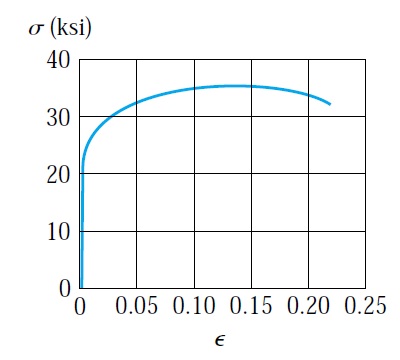
stress-strain diagram for aluminium alloy and rubber

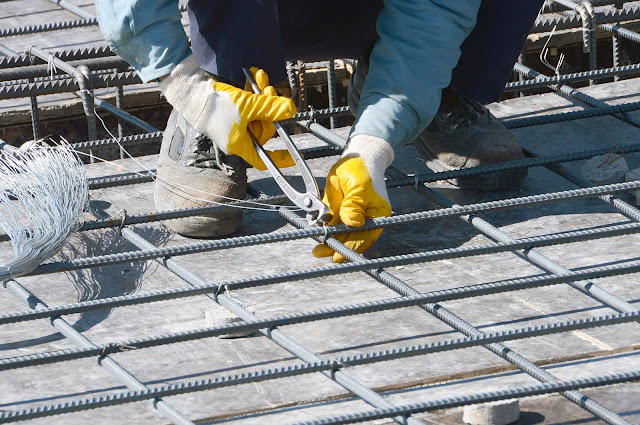
Binding wire for steel reinforcement

Pile cap

Non-Working Pile Testing and Static Compression Load Test

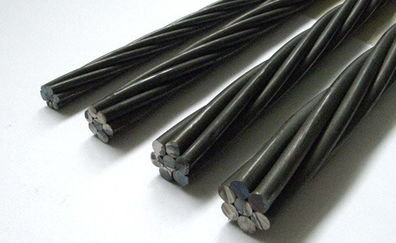
Prestressing stands debonding

Bridge Top slab

Fire resistive construction-firewalls

Nominal maximum size of coarse aggregate

Repairing of concrete bulging