


Load transfer mechanism for piles
piles are used for a structure that supporting large loads such as bridges and skyscrapers and in the case, if the soil that supporting the structure is weak and the bearing capacity is low. pile transmits the loads to the soil through two mechanisms:
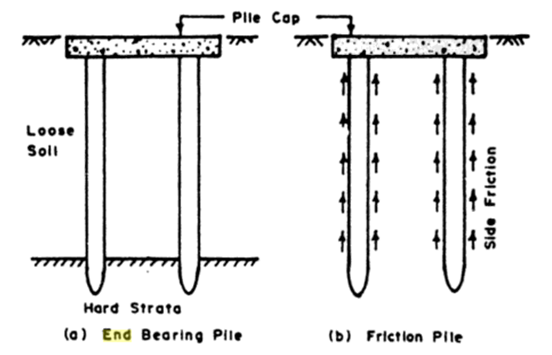
- Friction
pile: piles develop
most of the pile-bearing capacity by shear stresses along the sides
of the pile, and are suitable where harder layers are too deep
to reach economically. The pile transmits the load to surrounding soil by
adhesion or friction between the surface of the pile and soil,
the whole surface of the pile (cylindrical in
shape) works to transfer the forces to the soil.

Figure 1
End bearing pile: End-bearing piles develop most of their load-bearing capacity at the toe of the pile, bearing on a hard layer of rock or very dense soil and gravel. The pile transmits the load through soft, compressible strata directly onto firm strata. This type of pile, therefore, acts in the same way as a column.







Comments
Post a Comment